Hook Psychology6 min read
Contrast Principle & Shocking Revelations: Before/After Hooks That Kill
The contrast principle and cognitive dissonance create irresistible before/after video hooks. 5 copywriting templates + concrete examples.
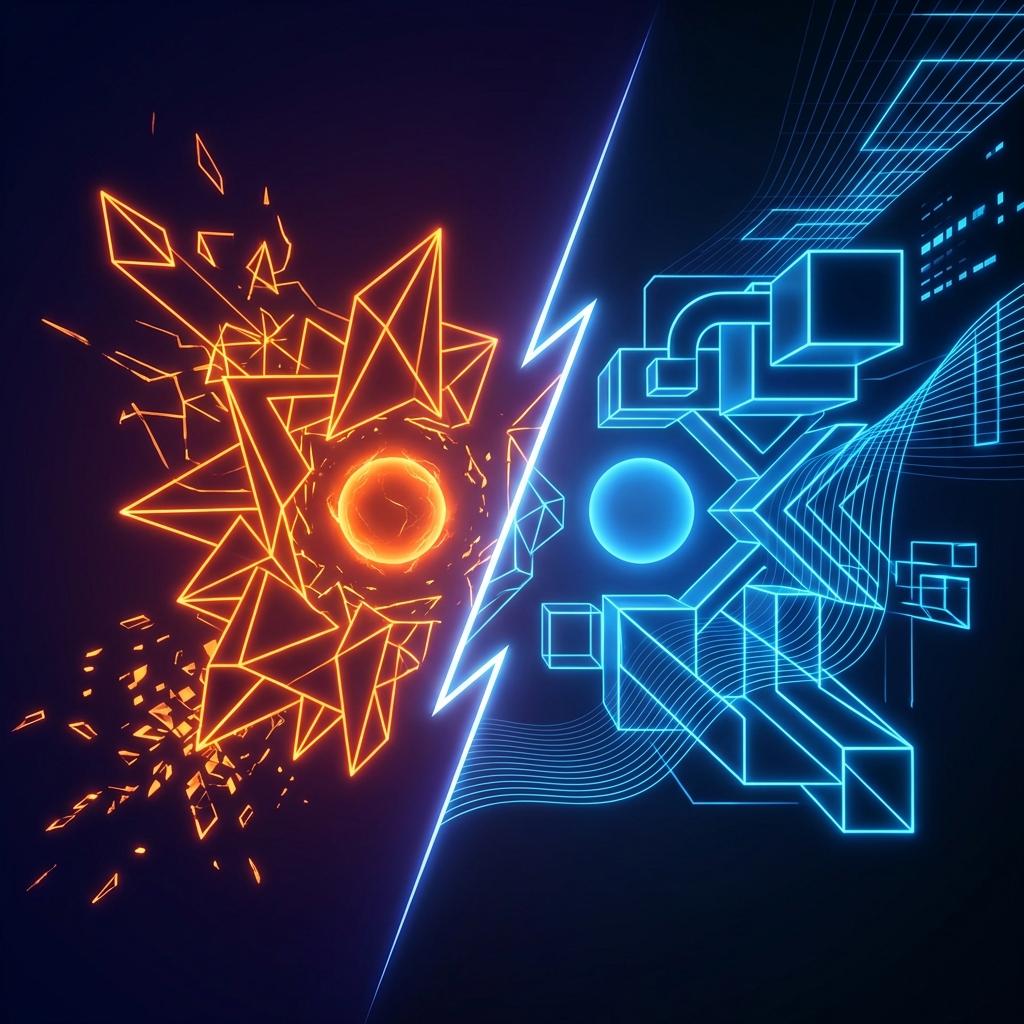
How cognitive dissonance transforms your viewers into captive spectators.
The Science of Contrast (Neuroscience)
The human brain is a comparator. It compares:
- Present vs Past
- Expected vs Actual
- Option A vs Option B
When you present two things in stark contrast, your brain automatically enters "comparison resolution" mode.
This is a cognitive tension called "Cognitive Dissonance" (Leon Festinger, 1957).
Example:
- ✅ You believe: "Expensive = better quality"
- ❌ You see: $5 product > $200 product
- 🧠 Cognitive dissonance: "Wait, this contradicts my belief"
- ⚡ Resolution needed: You must watch to understand how this is possible
This triggers mandatory attention.
Your brain cannot ignore the dissonance. It must resolve it.
The Contrasts That Kill
Type 1: Price Contrast
"I spent $1 vs $1,000 on [same thing]"
"This $20 product > $200 alternative"
Why effective: Financial stakes trigger immediate attention. People want to know HOW.
- Completion rate: 76-84%
Type 2: Results Contrast
"Before: I couldn't even do a pushup"
"After: I did 100 pushups (only took 30 days)"
Why effective: Visual/narrative transformation. Cognitive dissonance: "How is this possible?"
- Completion rate: 78-86%
Type 3: Belief Contrast
"Everyone says you need 8 hours sleep. I sleep 4. Here's why"
"People think success takes years. I did it in 6 months"
Why effective: Challenges established beliefs. Dissonance forces engagement.
- Completion rate: 74-82%
Type 4: Expectation Contrast
"I expected this would fail. It didn't."
"This was supposed to be hard. It was easy."
Why effective: Setup vs payoff. Brain wants to understand the inversion.
- Completion rate: 70-78%
Type 5: Authority Contrast
"A doctor REACTS to a dangerous trend"
"A billionaire RESPONDS to criticism"
Why effective: Expert validation of contrast. Higher credibility = higher engagement.
- Completion rate: 75-82%
Copywriting Templates: 5 Contrast Hook Variants
Variant 1: Price Contrast (Most Common)
Template:
"I spent [Small Amount] on this vs [Large Amount] on that. Here's the difference."
Examples:
- "I spent $50 on this gadget vs $500 on the alternative. Surprisingly, the cheap one won."
- "This $10 skincare product > every $200 luxury brand I've tried."
- "$1 hack that works better than the $1,000 solution."
Why it works: Price is an easily understood metric. Dissonance is immediate.
Optimal delivery: Say the cheap price first, then reveal it works better. Maximum surprise.
This is also the go-to structure for UGC creators producing product content for brands, because a price contrast sells without ever feeling like an ad.
Variant 2: Time Contrast
Template:
"I spent [Short Time] and got [Result]. Most people spend [Long Time] and get half the results."
Examples:
- "I studied for 2 weeks and passed the exam. My friends studied 3 months and barely passed."
- "30 minutes of this workout > 2 hours at the gym."
- "I learned Spanish in 3 months using this method. Most people take 2 years."
Why it works: Time is universally valued. Dissonance: "How did they do it faster?"
Optimal delivery: Emphasize the time DIFFERENCE, not just the absolutes.
Variant 3: Quantity Contrast
Template:
"[Small Number] of [thing] beats [Large Number] of [thing] when..."
Examples:
- "1 exercise beats 100 crunches for abs when..."
- "5 principles beat 100 tips for productivity."
- "3 ingredients beat every expensive skincare line."
Why it works: Numbers trigger comparison mode. Small > Large creates intrigue.
Optimal delivery: Lead with the small number, build curiosity about how.
Variant 4: Belief Contrast
Template:
"Everyone believes [common belief]. Here's why that's [wrong/backwards]."
Examples:
- "Everyone believes you need 10K followers to go viral. Here's why that's wrong."
- "People say you need a college degree for success. Here's what actually works."
- "Most creators think YouTube pays best. TikTok actually does."
Why it works: Challenges tribal beliefs. Dissonance forces listening.
Optimal delivery: State the common belief as a fact, then introduce contrary evidence.
Variant 5: Expert Contrast
Template:
"[Expert Type] says [one thing]. But I tested it and found [opposite thing]."
Examples:
- "Nutritionists say you need 3 meals/day. I tested OMAD and here's what happened."
- "Sleep experts say 8 hours. I sleep 4 and perform better."
- "Financial advisors say invest in stocks. I made more with [alternative]."
Why it works: Expert contradiction is high-dissonance. If an expert is "wrong," you MUST learn why.
Optimal delivery: Reference the expert's credibility, then present surprising alternative data.
Advanced: Stacking Contrasts
For maximum impact, stack 2-3 contrasts simultaneously:
Example (Skincare, 60 seconds):
[0-3s] Price Contrast: "$5 > $500"
[3-6s] Expert Contrast: "Dermatologists recommend X. I found Y works better."
[6-9s] Belief Contrast: "Everyone thinks you need 10 steps. I use 3."
[9-60s] Results Contrast: Show before/after, explain HOW.
This creates triple cognitive dissonance, which is near-impossible to ignore.
Completion rate with stacked contrasts: 82-90%
Neuroscience Deep Dive: Cognitive Dissonance Resolution
When you present a contrast, here's the neural sequence:
Step 1 (0-0.5s): Detection
Anterior cingulate cortex flags the contradiction
Signal: "Something doesn't match expectations"
Step 2 (0.5-1.5s): Tension
Amygdala activates (emotional response to incongruence)
Dopamine begins releasing (anticipation of resolution)
Step 3 (1.5-3s): Motivation
Prefrontal cortex demands explanation
Viewer is now "compelled" to keep watching to resolve the dissonance
Step 4 (3+s): Resolution Seeking
Continued viewing is now automatic (not optional)
Brain won't stop until dissonance is resolved
Why Contrast Hooks Have the Best Completion Rates
| Metric | Contrast Hooks | Standard Hooks |
|---|---|---|
| Completion @ 3s | 76-84% | 55-65% |
| Average Watch Time | +34% | Baseline |
| Shares | +28% | Baseline |
| Comments | +41% | Baseline |
Reason: Cognitive dissonance is involuntary. You cannot ignore it.
Practical Framework: Building Your Contrast Hook
Optimal Structure:
[0-1s] SETUP: Establish the "expected" baseline
[1-2s] CONTRAST: Introduce the shocking opposite
[2-3s] PROOF SIGNAL: Hint that you have evidence
[3-60s] RESOLUTION: Explain HOW/WHY with proof
Concrete example (45 seconds, fitness):
[0-1s] "Everyone thinks you need 1 hour of cardio to lose weight."
[1-2s] "I lost 20 lbs doing 10 minutes per day."
[2-3s] "Here's the science nobody talks about..."
[3-45s] Explain the mechanism (HIIT, metabolism, etc.)
Audience internal monologue:
- 0s: "Yeah, I know cardio takes forever..."
- 1s: "WAIT. 10 minutes?! How is that possible?"
- 2s: "Science? This person has credibility."
- Continues watching to learn the mechanism.
Common Mistakes to Avoid
❌ Mistake 1: Contrast Too Extreme
"I made $1M in 1 day with zero effort"
Problem: Not believable. Audience assumes clickbait and scrolls.
Fix: Make it surprising but plausible. "$10K in 30 days" is more credible.
❌ Mistake 2: No Proof Signal
"Cheap > Expensive" (no explanation)
Problem: Dissonance without resolution path = frustration.
Fix: Add "I tested 50 products" or "Here's the data."
❌ Mistake 3: Delivery Too Slow
Taking 10 seconds to setup the contrast
Problem: Audience scrolls before dissonance is created.
Fix: Create contrast in 1-3 seconds MAX.
The Takeaway
Cognitive dissonance isn't a bug. It's a feature.
Create a stark contrast. Your audience's brain will demand resolution. They'll watch.
The formula is simple. The execution requires precision.
Related articles:
Spot the viral posts in your niche before your competitors
Instagram and TikTok monitoring several times a day, AI blueprints, creator briefs in 5 min. 7 days free.
Frequently asked questions
How do contrast-based video hooks improve viewer engagement and completion rates?
Contrast hooks leverage cognitive dissonance, a mental tension that compels viewers to resolve a contradiction. This leads to significantly higher engagement, with completion rates reaching 82-90% for stacked contrasts. Videos using these hooks also see an average watch time increase of +34% and comments rise by +41%.
What types of contrast are most effective for creating viral video content?
The article highlights five highly effective types of contrast: Price, Results, Belief, Expectation, and Authority. Price contrasts, such as comparing a $5 product to a $500 alternative, achieve 76-84% completion rates. Results contrasts, like a "before/after" transformation, are also potent, reaching 78-86% completion.
Can you provide practical copywriting templates for creating these viral contrast hooks?
Yes, the article outlines five templates. For a Price Contrast hook, use 'I spent [Small Amount] vs [Large Amount] on this. Here's the difference.' For a Time Contrast, try 'I spent [Short Time] and got [Result]. Most people spend [Long Time] and get half the results.' These aim to immediately create dissonance.
How does cognitive dissonance specifically force viewers to keep watching my videos?
Cognitive dissonance is an involuntary brain response to a contradiction, like a belief conflicting with an observed reality. Your brain enters 'comparison resolution' mode, demanding an explanation. This process, involving the anterior cingulate cortex and prefrontal cortex, makes continued viewing automatic and nearly impossible to ignore until the dissonance is resolved.
How can Viral Manager help OFM agencies implement these powerful contrast hooks for their talent?
Viral Manager, as a SaaS platform for OFM agencies, provides the framework and tools to integrate these scientifically-backed contrast principles into your content strategy. By understanding the neuroscience and applying the provided templates, agencies can use Viral Manager to craft highly compelling video hooks, aiming for the documented 82-90% completion rates and increased virality for their creators.